Soulmate Angel: A Romantic Handwritten Font for Makers
It started with a candle label. I’d just poured my latest lavender-vanilla batch, and the jars sat waiting—clean, warm, and quietly demanding personality. I opened my design software, scrolled past dozens of fonts, and paused on Soulmate Angel. Not because it was new, but because it *felt* right—the kind of script that doesn’t shout, but leans in close with soft curves and gentle rhythm. Within minutes, “Calm & Kind” arched across a mockup label in Soulmate Angel, and suddenly the candle wasn’t just scented—it had a voice.
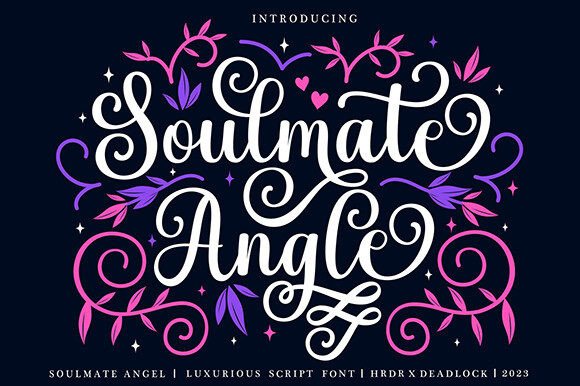
Soulmate Angel is a premium handwritten font from Script Amp, designed with warmth and intention. It’s not overly ornate or fussy—no sharp spikes or exaggerated flourishes—but full of subtle character: delicate entry strokes, graceful exits, and a natural flow that mimics real ink on paper. The lowercase ‘a’ has a quiet loop; the ‘g’ curls with quiet confidence; the capital ‘S’ sweeps like a breath held then released. It carries romance without cliché, elegance without distance—ideal for makers who want emotional resonance, not just decoration.
I’ve used Soulmate Angel across real production workflows—not just mockups, but printed labels, cut vinyl stickers, digital printables, and even hand-pressed packaging. On 2-inch kraft tags for artisan soap bars, it reads clearly at small sizes when set with generous letter spacing. On 5x7 greeting cards printed on textured cotton paper, its soft contrast and open counters keep it legible—even in shadowed corners of the card layout. And for wedding welcome boards? It’s become my go-to for names and short phrases like “You’re Home” or “Love Grows Here”—where tone matters as much as typography.
What makes Soulmate Angel especially practical for handmade sellers is how well it performs across formats. As a display font, it shines on mugs, tote bags, and wooden signs—especially when paired with a clean sans serif (like Montserrat Light or Poppins Regular) for supporting text. I often use it for headlines in digital planner pages, then switch to a simple serif (such as Cormorant Garamond) for body copy—creating visual hierarchy without competing energy. For seasonal products—think holiday gift tags, spring shower invitations, or autumnal wall art prints—I’ll layer Soulmate Angel over neutral backgrounds with light texture overlays, letting its organic rhythm soften the composition.
It’s important to note: Soulmate Angel is best suited for short, evocative text—not paragraphs. Think product names (“Hush Hour Candle”), boutique tags (“Hand-Poured • Small Batch”), invitation titles (“Emma & James • October 12”), or decorative phrases on printable wall art (“Breathe Deeply”). For longer text blocks—like care instructions on candle labels or event details on wedding programs—I pair it intentionally with a highly legible companion font. This keeps readability high while preserving the emotional hook of Soulmate Angel where it counts most: at first glance.
When prepping files for cutting machines (Cricut, Silhouette), I always convert Soulmate Angel to outlines before exporting SVGs—especially for intricate swashes or connected letters. The font includes standard ligatures and stylistic alternates, which add charm when enabled in design apps like Illustrator or Affinity Designer. But for small stickers (under 1 inch), I skip swashes entirely and stick to the base character set—cleaner cuts, fewer weeding headaches. Likewise, for printed product labels, I test at actual size on my home printer first: Soulmate Angel holds up beautifully at 10–14 pt when kerning is adjusted, but tight tracking below 9 pt can blur detail on matte stock.
For digital downloads—planner inserts, quote prints, or editable Canva templates—I include usage notes reminding buyers that Soulmate Angel is licensed for commercial use (including resale of physical and digital products), but they’ll need the .OTF or .TTF file installed to edit text. I also mention it supports Latin-based languages (English, Spanish, French, Portuguese) and includes basic punctuation and numerals—enough for dates, prices, and common phrases, though extended glyphs like accented characters beyond Western European may require checking the full character map.
One unexpected win? Shop branding. I recently refreshed my Etsy banner using Soulmate Angel for the shop name (“Wildflower & Co.”), then echoed its curve in the icon sketch and border motif. Customers didn’t comment on the font—but they did say the shop “felt like a place I wanted to linger.” That’s the quiet power of thoughtful typography: it shapes feeling before meaning, builds recognition before recall, and turns functional text into part of the story.
If you work with physical goods—candles, ceramics, botanicals, stationery—you’ll find Soulmate Angel adapts gracefully to your materials. On linen tea towels? Soft and inviting. On glossy sticker sheets? Crisp and charming. On rustic wood signs? Warm and grounded. And if you create digital printables—wedding suites, habit trackers, gratitude journals—it adds instant soul to layouts that might otherwise feel generic or overly clinical.
Before adding Soulmate Angel to your design toolkit, check what’s included: typically, one weight (regular), OpenType features (ligatures, alternates), and both .OTF and .TTF formats. Make sure your license covers your intended use—especially if you’re bundling the font inside editable templates or embedding it in SVG files for crafters to cut. Script Amp fonts are built for real-world making, so the licensing is straightforward, but verifying upfront saves time later.
At its heart, Soulmate Angel isn’t just another script font—it’s a collaborator. It meets your vision halfway: romantic but not saccharine, elegant but not stiff, handmade in spirit but polished in execution. Whether you’re pressing foil onto greeting cards, sizing text for a mug wrap, or choosing the final font for your holiday collection preview image—this is the kind of typeface that helps your work feel seen, felt, and remembered.